
It's Your Turn Now
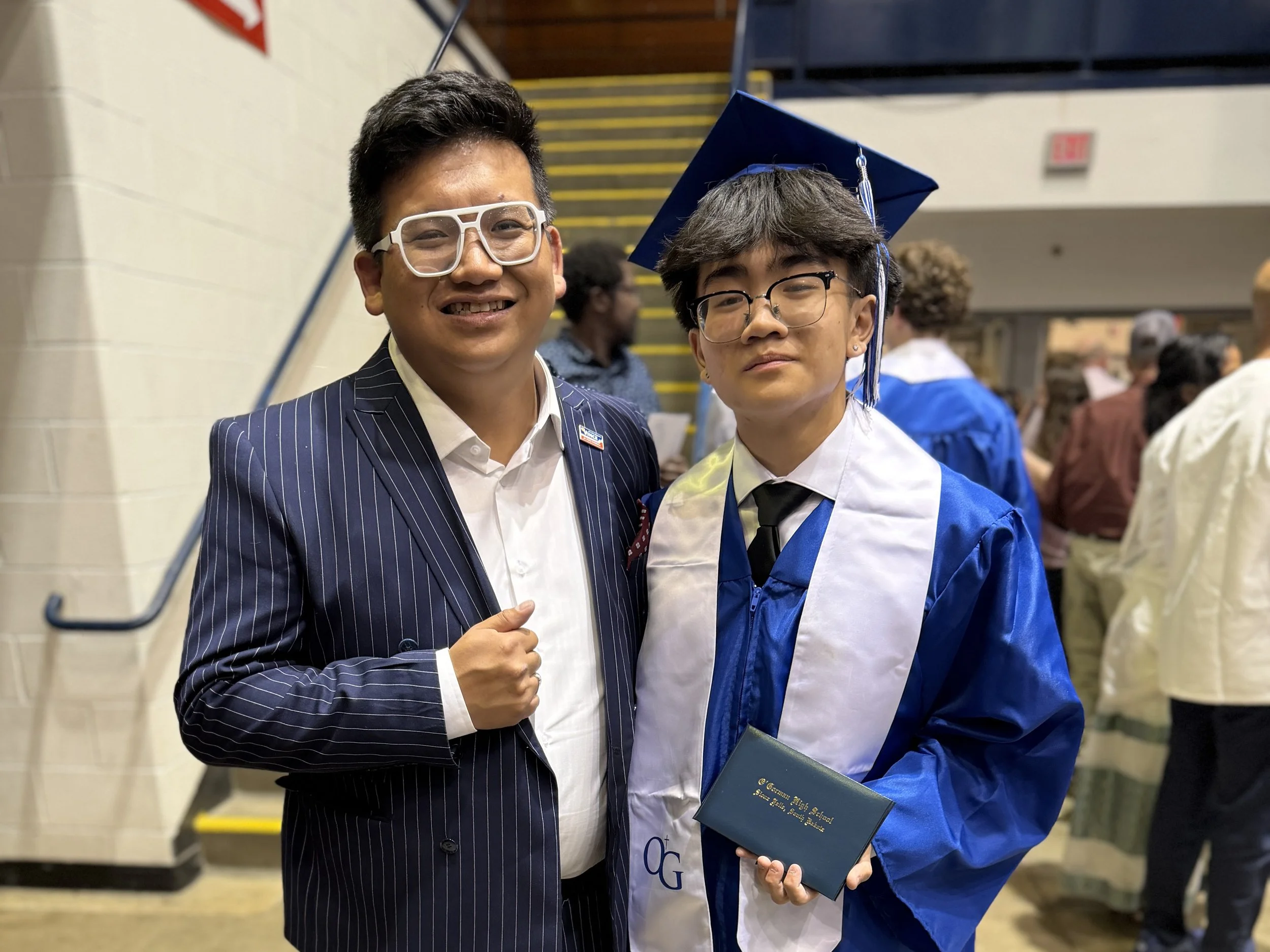
Two weekends ago, my baby brother James crossed the stage at O'Gorman High School and received his diploma. I watched from the crowd thinking about everything it took to get him there. Not just James. All three of us.
The Sacrifice That Got Us Here
My parents arrived in Sioux Falls in 1993. They came as refugees of the Vietnam War, drawn by a magazine ranking that said this was the best place to start a business. My dad worked the line at Morrell's. My mom picked up shifts wherever she could. Eventually, they saved enough to open the first Vietnamese restaurant in the city.
They did all of that while raising three boys. And they made a decision early: their sons were going to O'Gorman.
That's not a small decision when you're an immigrant family still learning a new country. Catholic school tuition, uniforms, activities — it adds up fast. But they believed in what that education could give us. Structure. Values. A community that would hold us accountable and challenge us to think harder.
They planted a tree knowing they'd be working in its shade for a long time before any of us got to enjoy the fruit.
James is the last of the three. When he walked across that stage, I thought about how much that diploma cost them. Not in dollars. In years.
What O'Gorman Gave Me
I graduated from O'Gorman in 2010. I didn't fully understand what I'd been given until long after.
The education was rigorous. But what shaped me most wasn't the curriculum. It was the expectation that you could figure things out. That you'd sit with a hard problem and not give up. That when you didn't understand something, you found someone who did and asked better questions.
I had to learn that skill early, and not just in class.
I was the first of my family to grow up fully bilingual. When my parents needed to navigate a lease, a permit, a conversation with someone in power, I was the bridge. Nine years old and translating paperwork at the kitchen table. Fourteen and sitting across from a lawyer, helping them negotiate terms they couldn't understand on their own.
O'Gorman gave me a framework. Necessity gave me the practice. Together, they built someone who genuinely believes that most problems, no matter how complicated, can be solved if you find the right language, the right people, and the patience to stay in the room.
2010 to 2026
Here's what I keep thinking about. James and I both graduated from the same high school. Same building. Same colors. Same traditions.
But we graduated into two completely different cities.
When I walked out of O'Gorman in 2010, I could count the culturally diverse kids in my class on two hands. The world felt big and far away. Sioux Falls felt like a familiar, quiet constant.
James is stepping into something different. Today, 45% of Sioux Falls School District students identify as non-white. 115 languages are spoken across our schools. The city I grew up in has become one of the most genuinely diverse small cities in the country, and it's still becoming.
That's not a challenge. That's a gift. But it only becomes a gift if we build the systems to match it.
What His Generation Is Walking Into
The Class of 2026 is stepping into a workforce being reshaped in real time. AI is doing jobs that didn't used to be automatable. Trades are changing. The pathways that were clear a decade ago are harder to see now, and nobody has a complete map.
James's generation will need to know not just how to do a job, but how to learn a job. And then relearn it. They'll navigate technology as both a tool and a collaborator. And they'll need communities willing to invest in building real runways, not just hand them diplomas and wish them luck.
The question isn't whether our kids can handle it. They can. The question is whether Sioux Falls will be the place they want to do it.
Fighting the Brain Drain
South Dakota has watched talented young people leave for decades. They grow up here, get educated here, and then go looking for cities where the opportunities feel bigger.
I understand the pull. I felt it too. But I came back, because I believe this city can be something extraordinary for the people willing to build it.
The question is whether we make it easy enough for the next generation to feel the same way.
That means real apprenticeships and workforce pathways with employers willing to invest in young people before they're fully formed. A small business ecosystem that doesn't require you to already have capital and connections to get started. Arts, culture, and creative industries that give young professionals a reason to plant roots here instead of just passing through.
It means building the kind of city that James and his classmates want to come back to after college. The kind where their ambitions don't feel too big for the zip code.
The City We're Building
James is eighteen. He has his whole life ahead of him. So does every other member of the Class of 2026 across Sioux Falls.
My parents sacrificed everything so three boys could get a head start in this city. The least we can do is make sure the city keeps earning that kind of commitment from every family that believes in it.
I'm running to build a Sioux Falls where today's children thrive. Where young people like James want to return and build their lives. Where every family, regardless of where they come from or how long they've been here, has a real chance to succeed.
That's not a campaign promise. That's the whole reason I'm in this race.
It's your turn now, James.
It's always been our city, and now is our moment.
Let's rise together. ☀️
— Vince Danh
Candidate, Sioux Falls City Council At-Large | June 2, 2026