
The Robots Don't Care If We're Ready
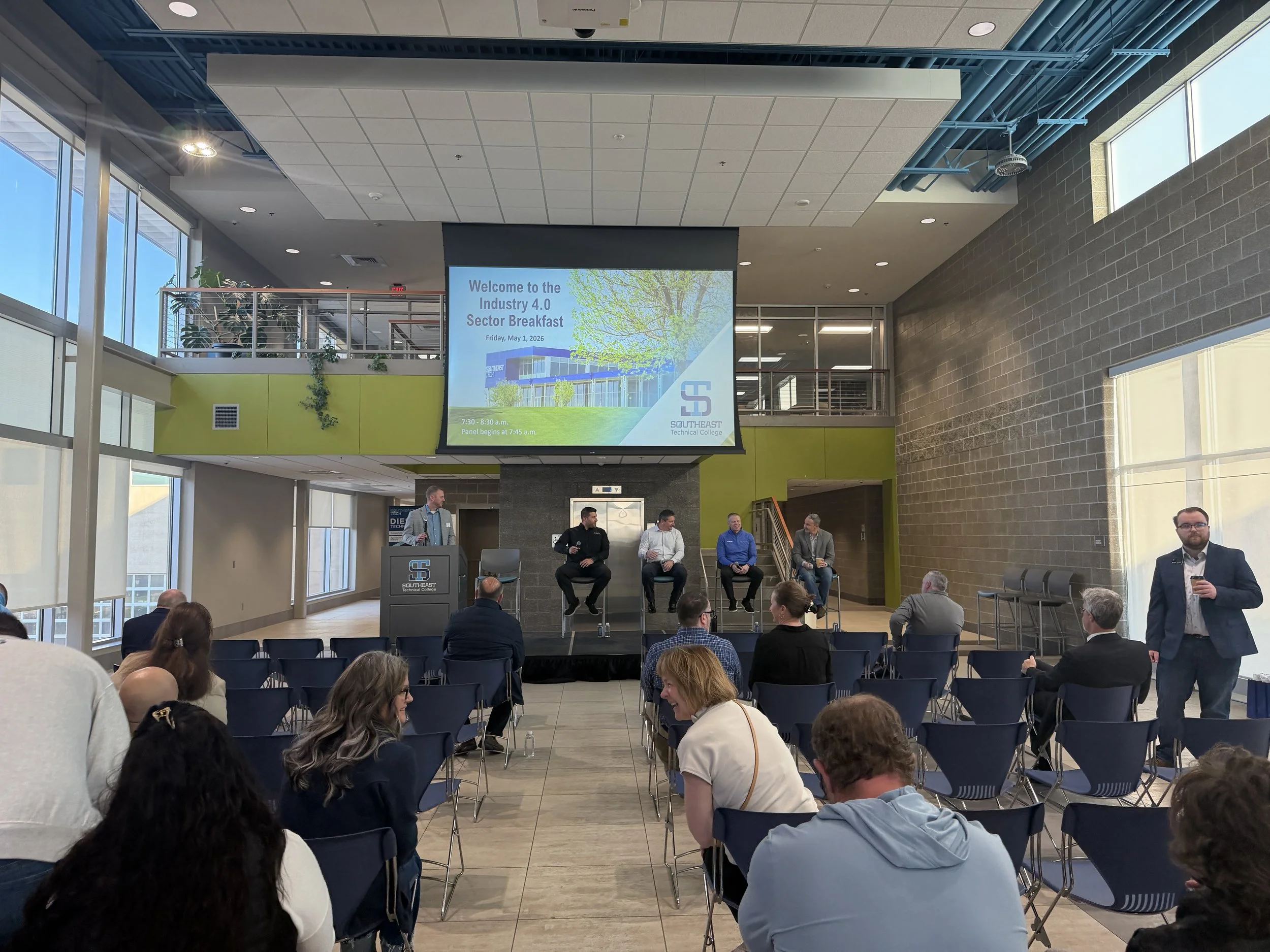
Derek DeGreest of DeGreest Corp, Chris Wilde of Graco, Scott Peterson of Interstates, and Mike Vetter of Wildfire Labs speak at the STC Industry 4.0 Sector Breakfast, May 1st, 2026.
This morning at Southeast Technical College, four leaders sat down to talk about Industry 4.0 — automation, AI, and the future of manufacturing. What I heard wasn't just about robots. It was about people.
My dad spent years working at Smithfield before my parents opened their restaurant. He understood what it meant to show up, clock in, and do the work with your hands. That generation built this city with grit and consistency.
The panel I attended this morning at Southeast Tech made one thing clear: the floor is shifting. The question isn't whether manufacturing will change. It's whether the people of Sioux Falls — and the students training right here in our city — will be ready to lead that change.
What "Industry 4.0" Actually Means
Industry 4.0 is shorthand for the digital transformation of manufacturing. Connected machines. Real-time data. Automation that learns.
The panelists — Derek DeGreest of DeGreest Corp, Chris Wilde of Graco, Scott Peterson of Interstates, and Mike Vetter of Wildfire Labs — have each spent years at the intersection of people and technology. Their message was both honest and energizing.
We're early. Peterson estimates Industry 4.0 adoption is in the first 10% of its potential. DeGreest pointed out that 85% of manufacturers don't even have a manufacturing execution system yet. Most AI use today is still individual or small-scale. The foundation isn't fully built.
But the pace is accelerating. And the window to prepare our workforce is open right now.
The Moment That Stuck With Me
A client installs an advanced robot system. State of the art. Expensive. Transformative. And then they turn to the integrator and ask: "Okay — who can run this?"
That's the gap. Not the technology. The people.
DeGreest put it plainly: graduates need to be prepared not just to operate a perfect, isolated cell. They need to understand how to connect different equipment, capture clean data, and troubleshoot when messy reality doesn't match the manual. That's not a robot problem. That's an education problem. And it's one we can solve.
Vetter added something that's been sitting with me since I left: students need to use AI to go faster, not to replace thinking. Spend a day a week learning how to automate the other four. Aim to 10x your impact. The people who embrace that mindset will outperform those who don't.
That's not just career advice. That's the workforce pathway Sioux Falls needs to build.
A Building Worth Getting Excited About
Manufacturing accounts for one out of every ten jobs in South Dakota. That's not a footnote. That's a foundation.
Southeast Tech is about to break ground on the James Abdnor Center for Advanced Manufacturing. Opening in Fall 2027, it will give students hands-on training with real automation systems, modeling software, and AI-ready tools — designed specifically to connect the classroom to the factory floor.
The center is named for Senator James Abdnor, a public servant who dedicated his life to education, youth, and opportunity. Senator John Thune, his protégé, helped secure the initial funding to make it happen. That kind of continuity matters. It's a reminder that the best investments we make are in people — and that those investments take time, intention, and real partnership between industry and education.
President Cory Clasemann has been clear about the vision: students who walk out of that building should be ready to step directly into high-demand careers. Not someday. Day one.
Equal Opportunity Means Preparing Every Student
Here's why this matters beyond the panel room.
Not every student in Sioux Falls has a parent who works in tech. Not every family has connections to employers hiring for automation roles. But Southeast Tech is right here — and the Abdnor Center is being built to close that gap.
That's what equal opportunity looks like in practice. It's not a scholarship brochure. It's building a pipeline from a classroom on the north side of Sioux Falls to a career that can support a family. We talk about workforce development as an economic strategy. It is. But it's also people-first policy. It's the difference between a kid who gets the chance and one who doesn't — not because of talent, but because of access.
What Comes Next
Sioux Falls is a manufacturing city. It always has been. And if we invest in the right foundations — connected systems, educated workers, strong industry-education partnerships — it will remain one for the next generation.
I left Southeast Tech this morning more convinced than ever that the talent is here. The institutions are here. The industry is here.
What we need is the intention to connect them.
That's the kind of leadership I'm running to bring to City Council. Not just cutting ribbons at new buildings. Making sure the people who walk through those doors have a real shot at what's waiting on the other side.
It's always been our city, and now is our moment.
Let's rise together. ☀️
— Vince Danh
Candidate, Sioux Falls City Council At-Large | June 2nd, 2026