
More Than a Transaction
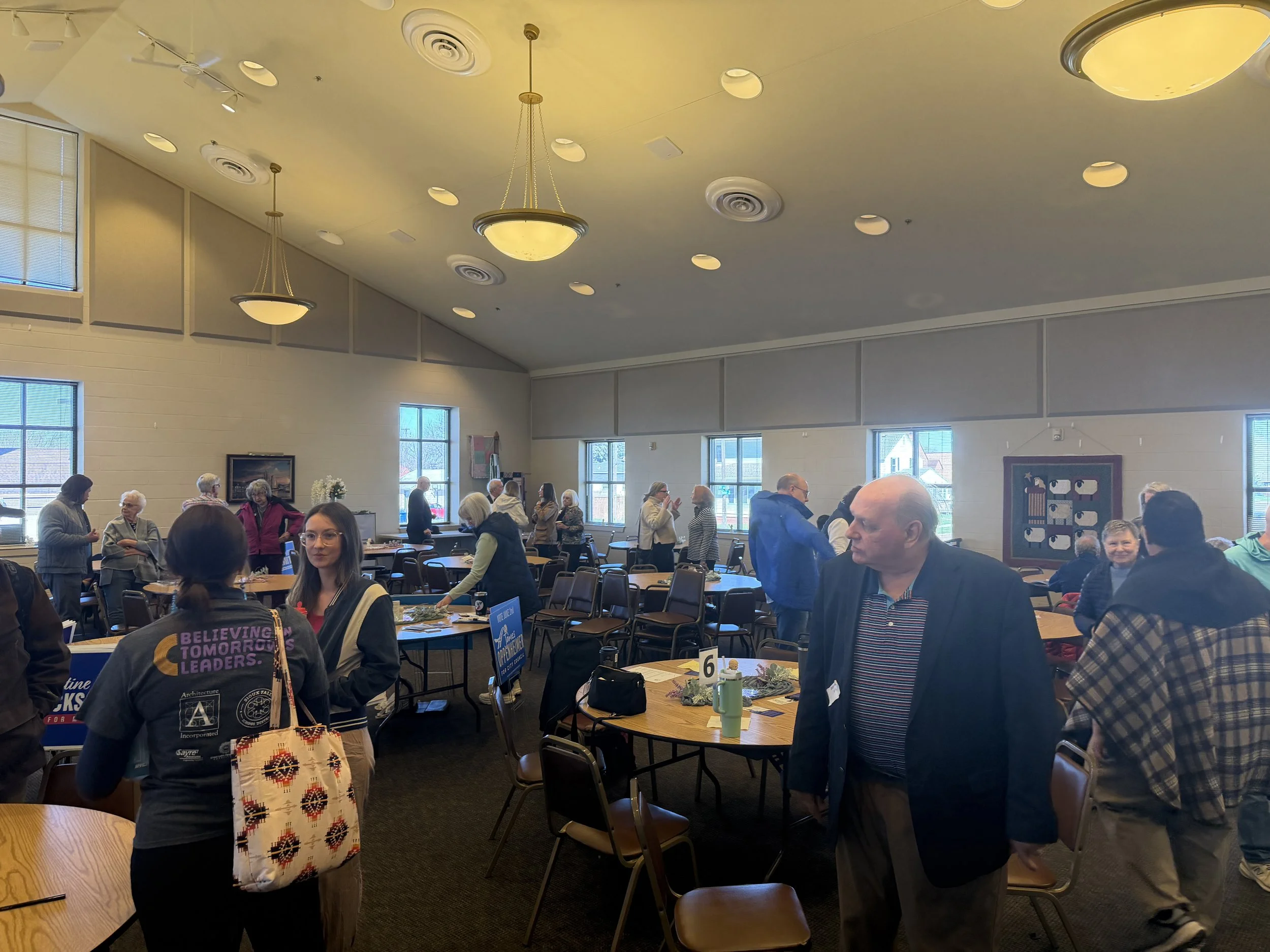
Change Agents of South Dakota had a roundtable on April 18th, 2026 which featured candidates for Mayor, At-Large City Council, and School Board.
Saturday morning at Eastside Lutheran Church felt like speed dating — 11 tables, 11 candidates, a buzzer, and 10 minutes to go deep on the issues this city is actually wrestling with. Change Agents of South Dakota put it together, and three hours later, I left with more clarity than I walked in with.
The Format
Change Agents of SD runs one of the better civic forums in this city. No podiums. No opening statements. Just voters at tables, candidates rotating through, and a buzzer keeping everyone honest.
You get 10 minutes. Then you move.
It sounds simple. It's actually harder than it looks — because you can't fall back on talking points. You have to listen. You have to respond to what's in front of you, not what you rehearsed in the car.
I talked to people from all over Sioux Falls. We covered affordability, development, transparency in government, and how decisions actually get made at City Hall. Some conversations were quick agreements. Others had real friction.
All of them were worth having.
The Word That Kept Coming Up
At almost every table, someone used the word investment.
Invest in infrastructure. Invest in growth. Invest in our communities.
And I understand the instinct. It's a serious-sounding word. It signals commitment. It suggests something of value will come back.
But I kept pushing back on it — gently, genuinely — because I think the word "investment" quietly frames things in a way that limits us.
Investment vs. Engagement
Here's the difference as I see it.
Investment is often a one-way transaction. You put something in. You expect something back. You track the return. When the return isn't measurable — or doesn't come fast enough — the case falls apart.
Engagement is something else entirely. Engagement means you go to where people are. You listen before you lead. You build buy-in. You work with people instead of on their behalf. The relationship is the point, not just the outcome.
That reframe matters because it changes who has power in the conversation — and who gets to define what success looks like.
Development Is a Perfect Example
When we talk about growth and development in Sioux Falls, the conversation usually starts at City Hall and moves outward. Plans get drawn. Presentations get made. Residents get notified.
That's investment thinking. Something goes in, something comes back, and the transaction is complete.
But the people most affected by how this city grows — the families in the neighborhoods — aren't a checkbox in that process. They're the whole point.
Here's something that stuck with me: when I attended a Sioux Falls neighborhood association meeting, only 7 of our 21 neighborhood associations were represented in the room.
Seven out of twenty-one.
That's not a communication problem. That's an engagement gap. And if we're serious about growing this city responsibly, we have to close it.
Neighborhood Associations as an Engagement Space
Sioux Falls has 21 neighborhood associations. They exist for exactly the reason we need them — to give residents a organized, consistent voice in what happens where they live.
But an association that isn't active, isn't funded, and isn't connected to City Hall isn't an engagement space. It's just a name on a list.
One of my priorities is to revitalize and strengthen our neighborhood associations — not as a bureaucratic exercise, but as a genuine bridge between residents and government. When a development proposal comes forward, I want there to be a real, functioning neighborhood structure ready to respond. When the city needs feedback on a road project, a rezoning, a park upgrade — I want neighbors to already have a seat at the table, not just a public comment period at the end.
That's what engagement looks like in practice. Not a one-time meeting. A lasting relationship.
What I'm Running to Do
City Council members don't control everything. But they control the posture.
They decide whether City Hall goes to the people or waits for the people to come to them. They decide whether a community gets a presentation or a conversation. They decide whether residents are treated like stakeholders — or like constituents who'll be updated when there's something to announce.
I'm running to change the posture.
Not because the current council doesn't care. But because care isn't enough. The work of engagement — real, sustained, relational engagement — is harder than investment. It takes longer. It's messier. And it builds something that lasts.
That's the Sioux Falls I'm fighting for.
It's always been our city, and now is our moment.
Let's rise together. ☀️
— Vince Danh
Candidate, Sioux Falls City Council At-Large | June 2nd, 2026