
The Teachers Were Always Artists
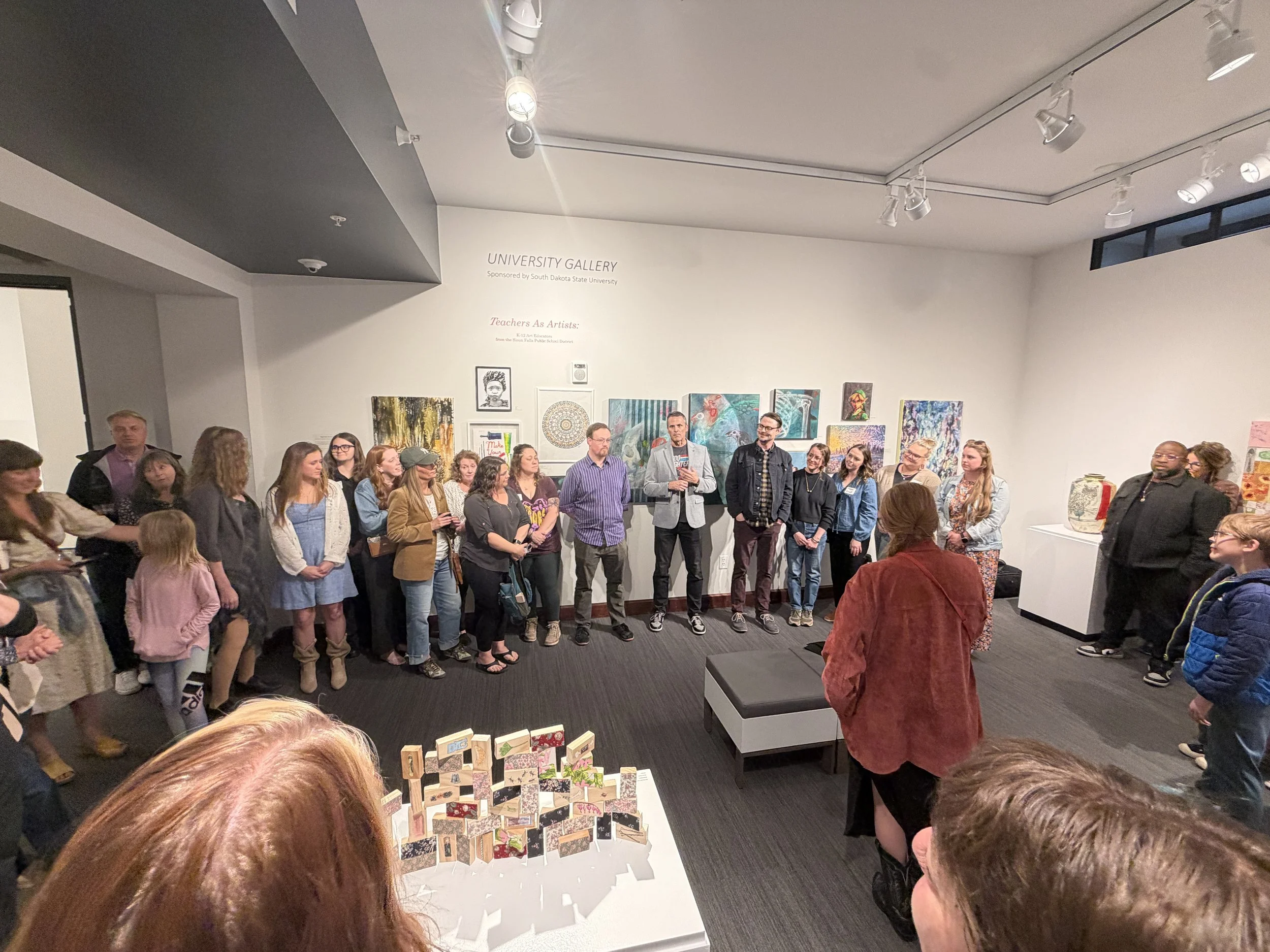
Friday evening at the Washington Pavilion, the mayor stood in a gallery and recognized the art teachers of Sioux Falls — not for what they teach, but for what they make. It was a small moment. It was also exactly the right one.
What Friday Night Looked Like
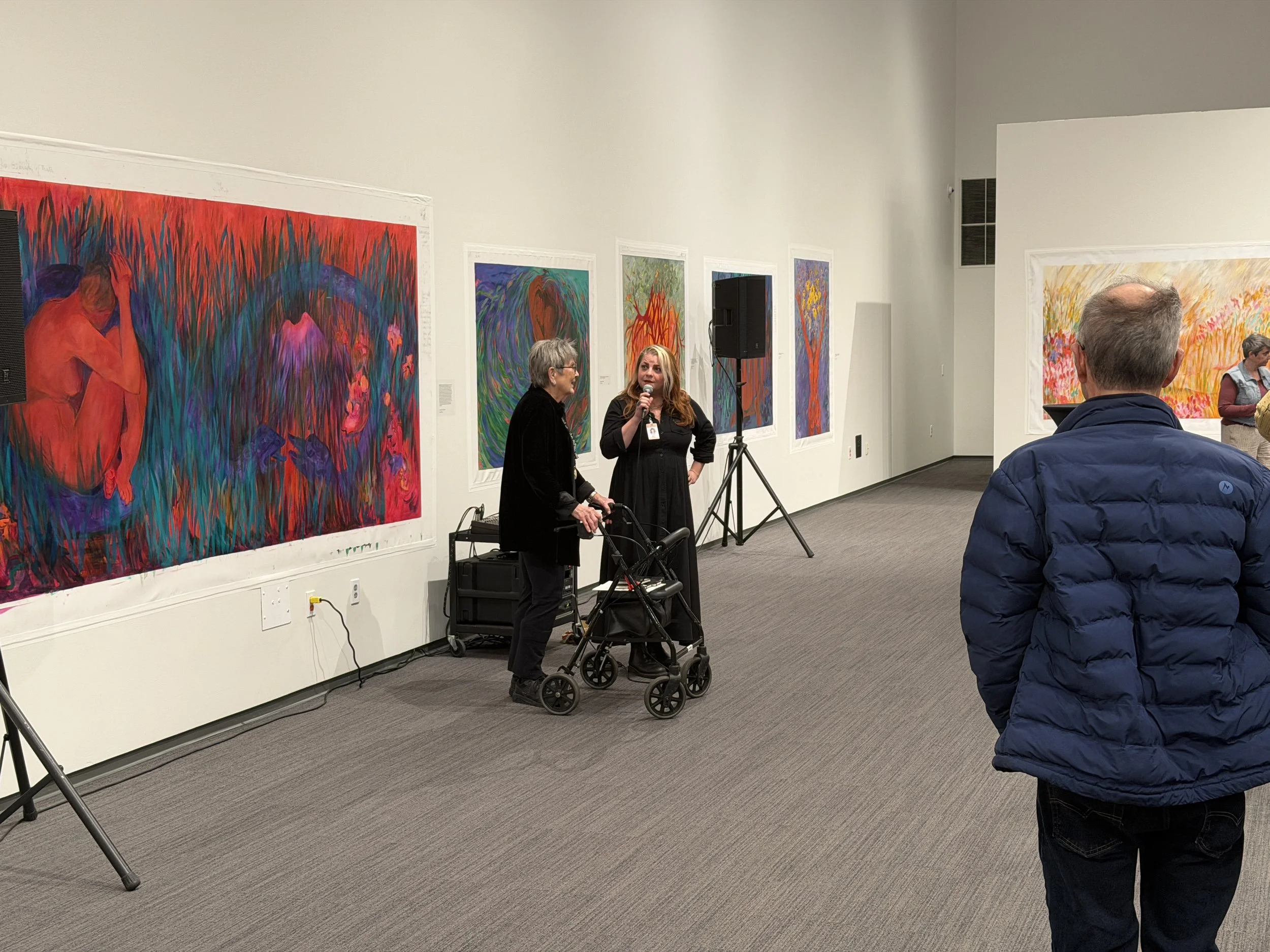
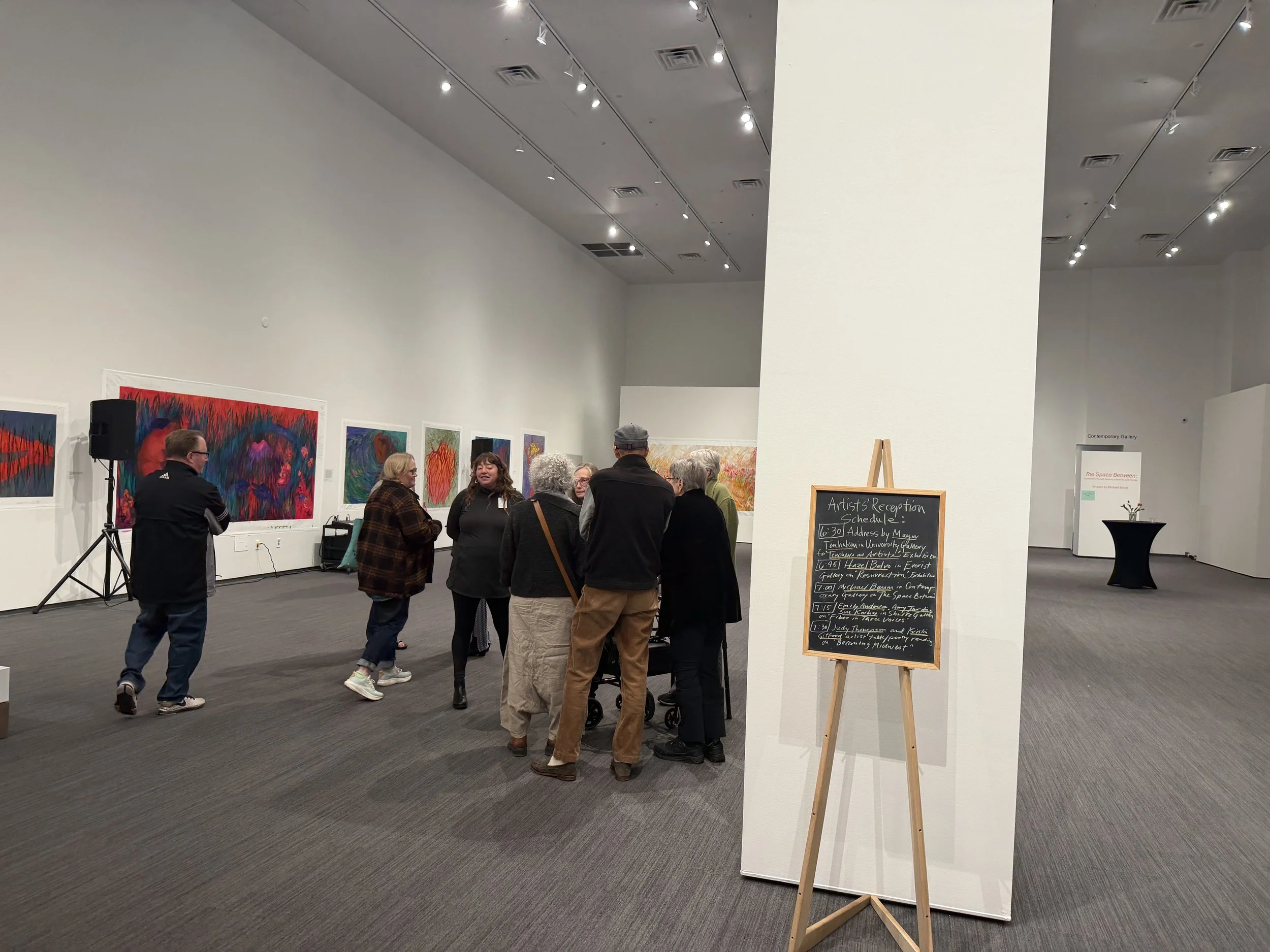
The Visual Arts Center hosted multiple artist receptions on April 17th, and walking through the galleries felt less like a campaign stop and more like a reminder of what this city is capable of.
Three exhibitions stood out.
Teachers as Artists — a showcase of K–12 art educators from the Sioux Falls Public School District, displayed as the working artists they've always been. Not as curriculum. Not as staff. As people with something to say through their work.
I'll be honest — I didn't know what to expect walking in. What I found was a pleasant surprise. Colleagues. Familiar faces. And then, across the gallery, someone I hadn't seen in years: Meagan Turbak, an old high school classmate who is now an art teacher at Edison Middle School, with her own work on the wall. That stopped me.
Resurrection: A Feminist Perspective — large-scale paintings by Hazel Belvo, a celebrated American artist with more than sixty years of work behind her. Paintings about rising after struggle. About healing. About cycles that don't end — they continue. Her artist statement holds a line I haven't been able to shake:
"We rise, again and again. We rise. We teach. We heal."
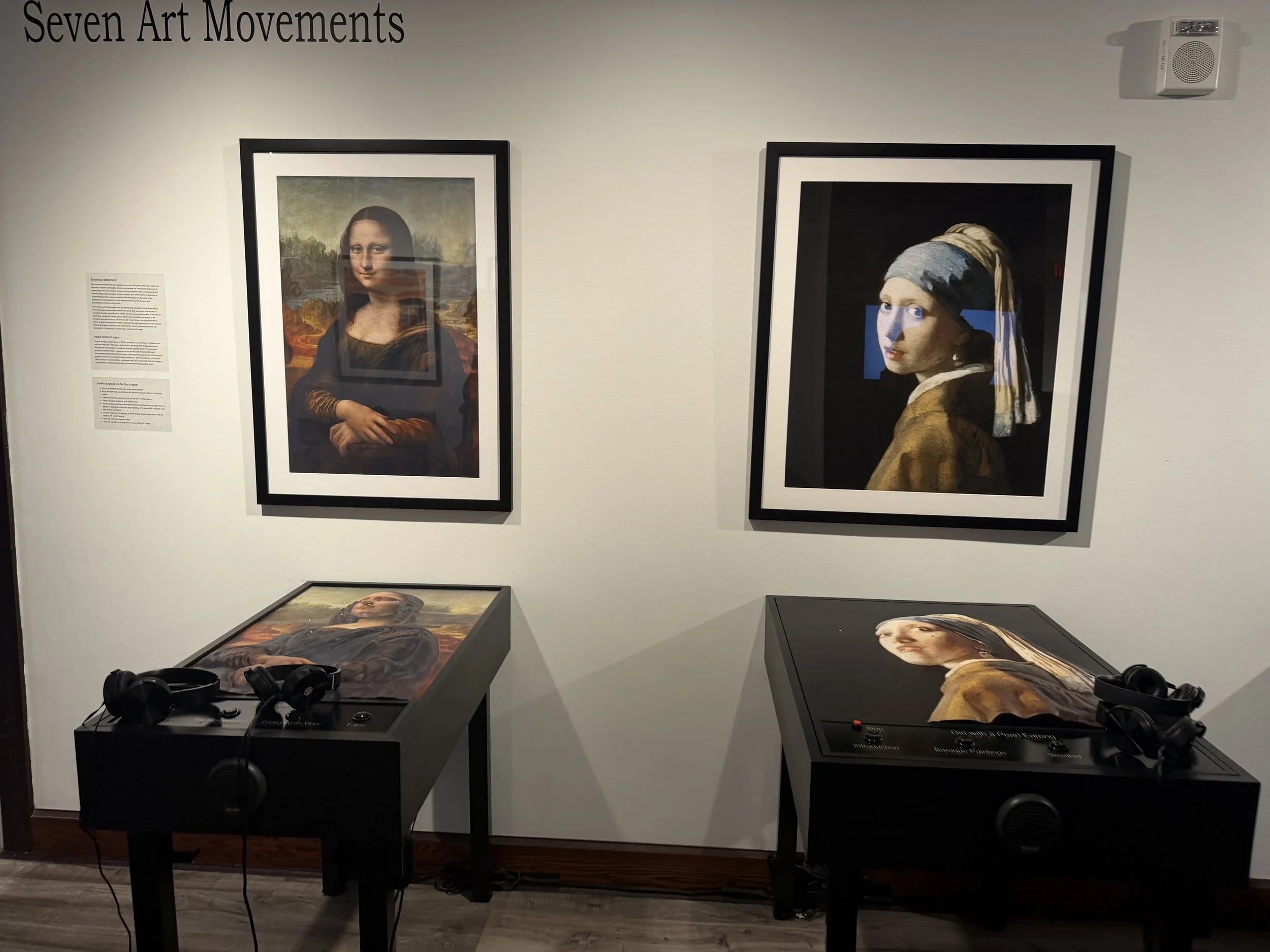
And Seven Art Movements: A Tactile Exhibition — presented in collaboration with the National Federation of the Blind, this exhibition invites visitors to experience art through touch and sound. Raised surfaces, braille text, audio narration, touch-activated sensors. Da Vinci. Vermeer. Van Gogh. Accessible to everyone.
Each of these three could anchor its own conversation. Together, they made the case for something bigger.
The Recognition Matters. But It's Not Enough.
Mayor TenHaken addressed the room and recognized the art educators whose work was on display. That recognition was meaningful.
But I want to sit with something deeper for a moment.
These aren't just artists. They're teachers. Every day, they walk into classrooms across Sioux Falls and nurture the next generation of creative thinkers — kids who are learning how to observe, experiment, problem-solve, and express something true about themselves. That's not a soft skill. That's a foundation.
My old classmate Meagan doesn't stop being an artist when the bell rings. She brings that creative life into the classroom, and her students are better for it. The same is true for every educator in that gallery.
Recognizing them as artists is right. But what they also deserve is a city that recognizes what they're building in those classrooms. One that invests in art education not just as enrichment, but as essential preparation for engaged, imaginative citizens. One that doesn't make teachers fight for their programs every budget cycle.
Recognition is a start. Sustained engagement is the goal.
Investment vs. Engagement
When we frame the arts as an investment, we ask: what's the return? What's the economic impact? How do we justify the line item?
Those questions have their place. But they're not the whole picture — and when they become the only picture, we've already missed something.
The teachers in that gallery weren't there because someone calculated the ROI on their creative output. They were there because they are part of this city's fabric. Their work doesn't produce a metric. It produces meaning. And meaning is what makes Sioux Falls feel like home rather than just a place to live.
The tactile exhibition said it plainly: art belongs to everyone. Not just people with resources, or time, or the right connections, or even the ability to see. When we build an arts community that removes barriers instead of creating them, that's engagement. Showing up for people where they are. Making room.
Engagement says: we see you as a full person. We create the conditions for your work to exist and be seen. And then we keep showing up.
That's what Friday night was, at its best.
What Hazel Belvo's Work Said to Me
Resurrection is massive in scale. The figures are human-sized or larger — intentionally, to create connection, to invite you to relate personally to the subjects. Each color gains strength when placed next to others. Stronger together, as Belvo puts it.
A woman with a sixty-year career, bringing her life's work to Sioux Falls. Paintings about rising after struggle. About healing. About cycles that don't end.
I don't know how you put a dollar value on standing in front of that.
I know what it felt like. And I know that a city that makes room for that experience is a city worth fighting for.
This Connects to Our Pillars
I've written before about why the arts aren't optional — they're infrastructure for connection. Friday night at the Pavilion was proof.
A Vibrant Community doesn't announce itself. It's built by the people who show up: the art teacher who spends her evenings in the studio, the mayor who stands in a gallery and says I see you, the artist who travels to Sioux Falls with sixty years of work and trusts us with it.
Equal Opportunity means every family in this city has a reason to walk through those doors — and feels something when they do. It means the kid who is blind gets to touch a Van Gogh. It means the art teacher at Edison Middle School gets to be seen as the artist she always was.
The job of city government isn't just to fund the arts and move on. It's to keep showing up. To treat our creative community not as a line item to be justified, but as a living part of who we are.
That's the difference between investment and engagement.
And it's the Sioux Falls I'm running to build.
It's always been our city, and now is our moment.
Let's rise together. ☀️
— Vince Danh
Candidate, Sioux Falls City Council At-Large | June 2nd, 2026